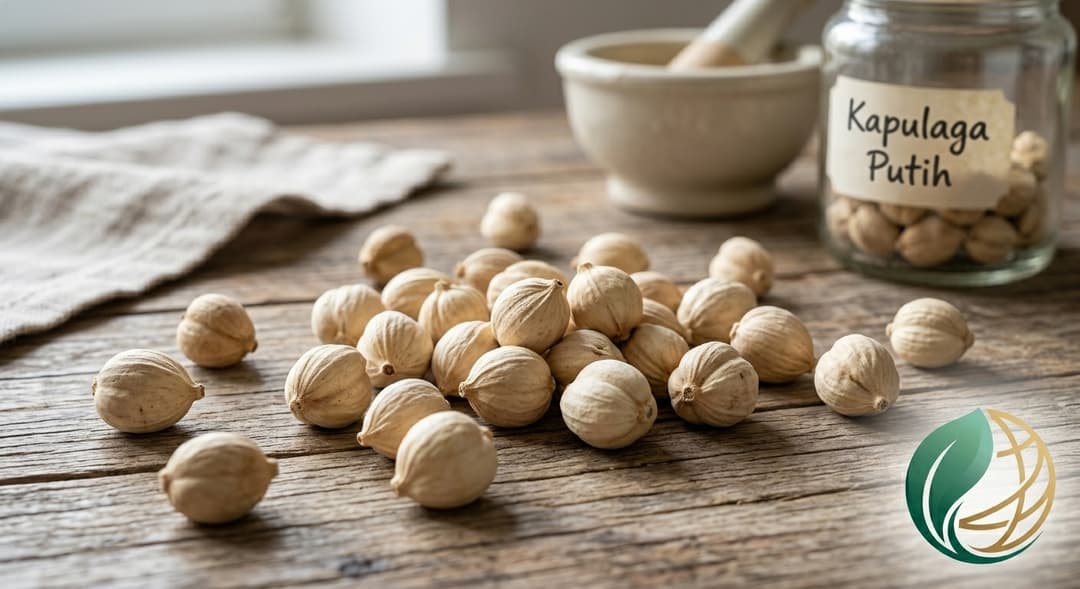
The Rich History of Javanese Cardamom: From Ancient Kingdoms to Global Spice Trade
- 03 May 2026
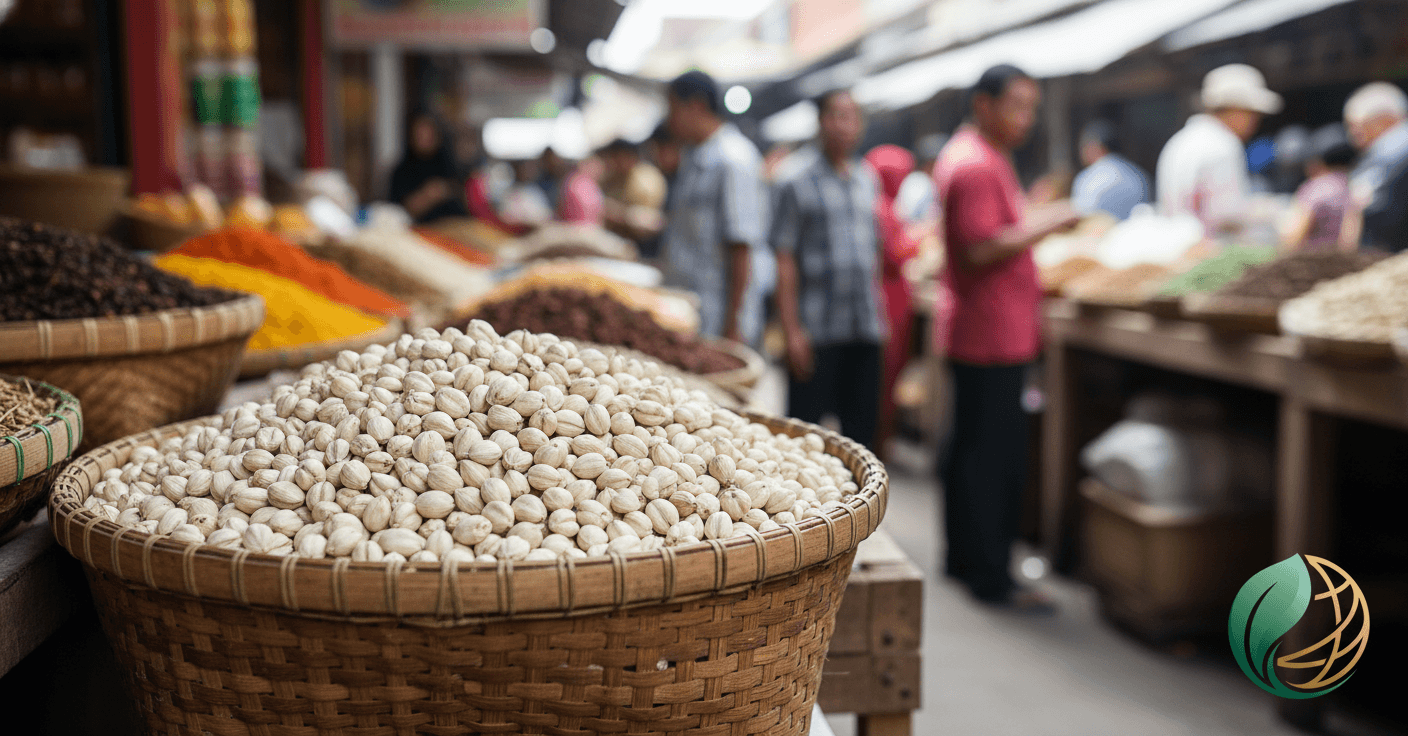
Long before the world knew about global supply chains and agricultural exports, the islands of the Indonesian archipelago were already the center of an international spice trade that shaped empires, drove exploration, and sparked wars. Among the many prized spices that came from this part of the world, Javanese Cardamom (Amomum compactum) holds a particularly storied place — woven into the very fabric of Javanese civilization.
Ancient Roots: Cardamom in Javanese Kingdoms
The earliest recorded references to cardamom in Java date back to the 9th century, found in inscriptions from the Mataram Kingdom era. Royal edicts (prasasti) from this period mention kapulaga among the aromatic ingredients used in sacred rituals, royal offerings (sesaji), and medicinal preparations.
In the royal courts of the Majapahit Empire (13th–15th centuries) — one of the greatest maritime empires in Southeast Asian history — cardamom was among the spices mentioned in the Nagarakretagama, a 14th-century Old Javanese poem that serves as a detailed account of life in the empire. It was used in royal perfumery, court medicine, and as an offering in Hindu-Buddhist ceremonies.
The spice was not merely a commodity; it was a sacred ingredient believed to possess protective and purifying properties. Priests and healers (dukun) used cardamom pods in spiritual rituals alongside incense and other botanicals to create a bridge between the physical and spiritual worlds.
The Spice Trade Era: Java at the Center of the World
The 15th and 16th centuries marked a golden era for spice trading in Southeast Asia. As European powers sought to control the source of the world's most valuable commodities, the Indonesian archipelago became the focal point of intense geopolitical competition.
Javanese ports — particularly Tuban, Gresik, and Demak — served as major trading hubs where spices from across the archipelago were consolidated for shipment westward. Javanese Cardamom, along with pepper, cloves, and nutmeg, was a key commodity in this trade network.
Arab and Indian traders had long maintained commercial relationships with Javanese merchants, and cardamom was among the items exchanged for textiles, ceramics, and gold. Javanese trading vessels sailed as far as the Malay Peninsula, the Indian subcontinent, and the Arabian Peninsula, carrying their aromatic cargo to eager markets.
The Dutch Colonial Period: Control and Commodification
The arrival of the Dutch East India Company (VOC) in the early 17th century transformed the spice trade dramatically. The Dutch imposed a monopoly system (Herendienstplicht) that forced Indonesian farmers to grow specific crops at fixed prices — a system that fundamentally changed how spices like cardamom were cultivated and traded.
Under Dutch colonial rule, cardamom cultivation in Java was regulated and taxed. Farmers in the highlands of West Java and Central Java were required to deliver a portion of their harvest to colonial warehouses (loji). The Dutch then exported Javanese Cardamom to European markets alongside the more famous spices, where it was used in medicine, perfumery, and cooking.
Despite the exploitative nature of the colonial system, this period paradoxically helped spread Javanese Cardamom's reputation across Europe. Dutch herbal compendiums from the 17th and 18th centuries regularly reference Amomum species from Java as having valuable medicinal properties, particularly for digestive and respiratory complaints.
Post-Colonial Revival: Cardamom in Independent Indonesia
Following Indonesia's independence in 1945, the agricultural sector underwent significant transformation. Many colonial plantations were redistributed or nationalized, and farmers were given more control over their land and crops.
Javanese Cardamom cultivation became increasingly associated with smallholder farming — a model that continues today. Families in the highlands of West Java (Jawa Barat), Central Java (Jawa Tengah), and parts of East Java (Jawa Timur) have maintained cardamom gardens as a supplementary income source, often growing the plants under the shade of larger trees in a traditional agroforestry system called tumpang sari.
This farming method, which integrates multiple crops in a mutually beneficial arrangement, is not only economically viable but also environmentally sustainable — a fact that resonates strongly with modern consumers interested in ethical and ecological sourcing.
Traditional Medicine: The Jamu Legacy
One of the most enduring legacies of Javanese Cardamom is its central role in jamu — the traditional Indonesian system of herbal medicine. Dating back at least to the Majapahit era, jamu involves the preparation and consumption of herbal tonics using locally sourced botanicals.
Cardamom is a staple ingredient in dozens of jamu formulations, valued for its ability to:
- Aid digestion and relieve stomach complaints (masuk angin)
- Freshen the breath and support oral hygiene
- Clear the respiratory system and relieve coughs
- Warm the body and improve circulation
- Balance the body's energies according to Javanese cosmological concepts
The jamu gendong tradition — where women carry baskets of freshly prepared herbal tonics through neighborhoods to sell door-to-door — remains alive in many Javanese cities today. Cardamom-based drinks are among the most popular offerings, connecting urban consumers to an ancient wellness tradition.
Javanese Cardamom in the 21st Century
Today, Javanese Cardamom stands at an interesting crossroads. On one hand, it faces competition from cheaper imported cardamom, particularly from Guatemala, which has become the world's largest cardamom producer. On the other hand, growing global interest in authentic, traceable, and sustainably sourced ingredients has opened new opportunities for Javanese producers.
Health-conscious consumers in Europe, North America, and East Asia are increasingly seeking out specialty spices with a documented origin and a compelling story. Javanese Cardamom — with its unique flavor profile, centuries of documented use, and connection to sustainable smallholder agriculture — ticks all of these boxes.
For those who want to support this rich agricultural tradition while enjoying a truly premium product, authentic Javanese Cardamom from Arstnesia offers a direct connection to the farmers and growing regions that have cultivated this spice for generations.
Preserving a Living Heritage
The story of Javanese Cardamom is ultimately a story about continuity — the unbroken thread that connects ancient kingdoms to modern kitchens. Every pod of cardamom grown in the Javanese highlands carries with it thousands of years of agricultural knowledge, cultural meaning, and natural wisdom.
By choosing Javanese Cardamom, you become part of this story. You help sustain the farmers who tend these plants by hand, preserve the agroforestry systems that protect Java's biodiversity, and keep alive a culinary and medicinal tradition that is truly irreplaceable.
Become part of the story — explore premium Javanese Cardamom sourced directly from the heartland of Java's spice heritage.